
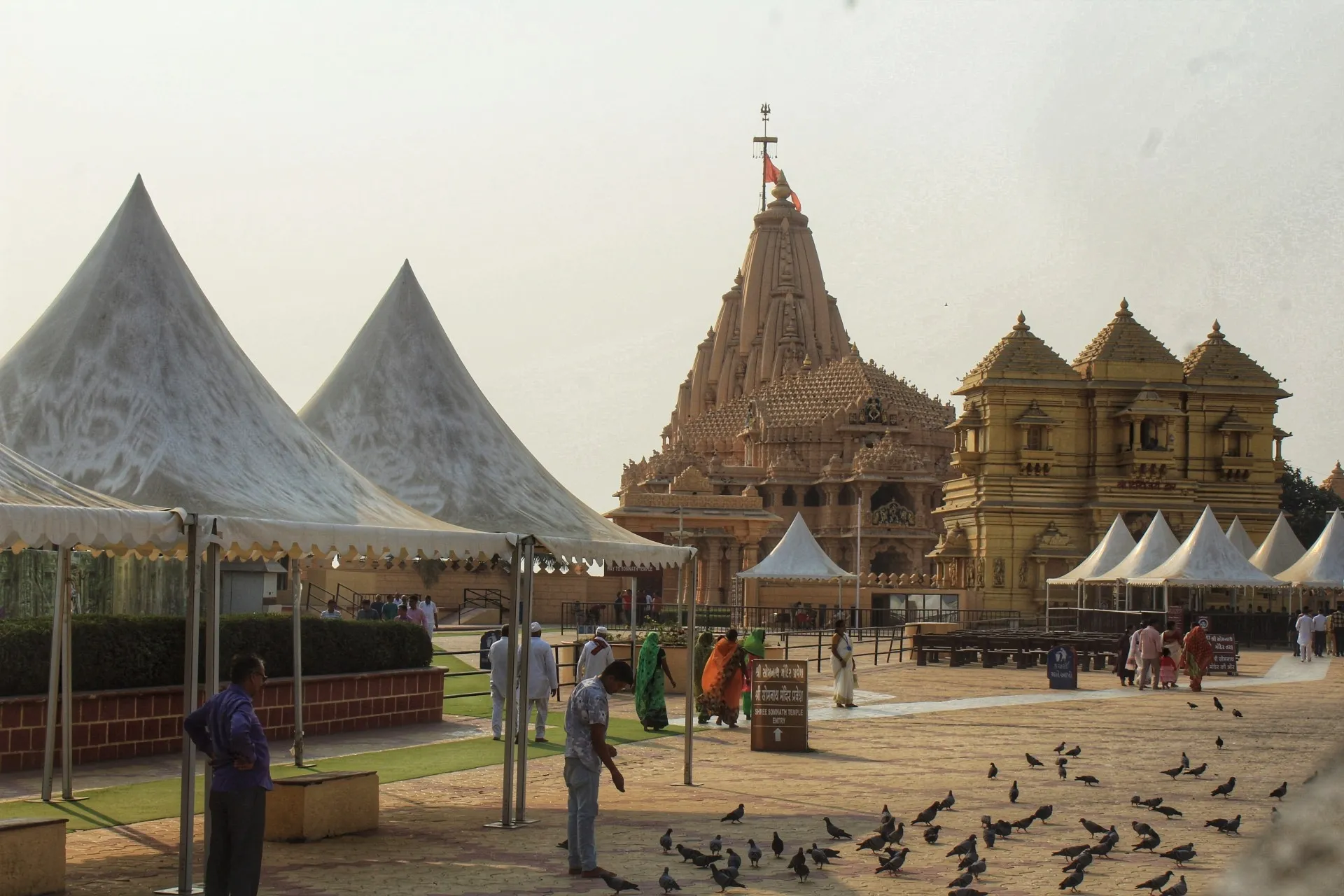
You will find many sacred places in India since it is home to many, but the Somnath Jyotirlinga holds a very special place among devotees and travelers. Located in the peaceful town of Prabhas Patan near the Arabian Sea, this temple is known as the first Jyotirlinga of Lord Shiva. Every year, thousands of pilgrims and tourists visit this holy place to seek blessings, enjoy the spiritual atmosphere, and explore the rich history of Gujarat.
If you are planning a trip to Somnath Temple, this travel guide will help you understand everything about the temple, its history, timings, nearby attractions, and travel tips simply and easily.
Table of Contents
About Somnath Jyotirlinga
Somnath Temple is one of the twelve Jyotirlingas of Lord Shiva. According to Hindu beliefs, Jyotirlingas are sacred shrines where Lord Shiva appeared as a divine light.
The word “Somnath” means “Lord of the Moon.” It is believed that the Moon God, Chandra, worshipped Lord Shiva here to free himself from a curse. Because of this story, the temple became famous as Somnath, the protector of the Moon.
The temple stands proudly on the western coast of Gujarat and offers beautiful sea views. The sound of waves and temple bells together creates a peaceful spiritual experience for visitors.
History of Somnath Temple
Somnath Temple has a long and powerful history. It is believed that the original temple was built many thousands of years ago. Over time, the temple was destroyed and rebuilt several times by different rulers.
One of the most talked-about events in history was the attack by Mahmud of Ghazni in 1025 CE. Despite repeated destruction, devotees and kings rebuilt the temple again and again. This shows the strong faith connected with Somnath Jyotirlinga.
The present structure of the temple was rebuilt in 1951 under the guidance of Sardar Vallabhbhai Patel, India’s Iron Man. Today, the temple stands as a symbol of faith, strength, and devotion.
Architecture of Somnath Temple
The architecture of the Somnath Temple is beautiful and grand. The temple is built in the Chalukya style with detailed carvings, tall pillars, and a magnificent shikhara (tower).
The temple is made from sandstone and reflects traditional Indian temple architecture. The main shikhara rises around 155 feet high, and a large flag waves at the top. Interestingly, the temple flag is changed several times a day.
One unique feature of the temple is the “Arrow Pillar” or Baan Stambh. It indicates that there is no land between the Somnath seashore and Antarctica in a straight line. Visitors are often amazed by the combination of spiritual energy and natural beauty surrounding the temple.
Spiritual Importance of Somnath Jyotirlinga
For Shiva devotees, visiting Somnath Jyotirlinga is considered highly sacred. Many people believe that praying here brings peace, prosperity, and spiritual growth.
The temple is especially crowded during:
- Mahashivratri
- Shravan month
- Kartik Purnima
- Mondays are dedicated to Lord Shiva
The evening aarti at Somnath Temple is a deeply spiritual experience. Devotees gather to listen to prayers, bells, and chants while the sea breeze adds calmness to the atmosphere.
Somnath Temple Timings
Before visiting Somnath Temple, it is important to know the temple timings:
Temple Opening Hours
The temple opens daily at 6:00 AM and remains open till 10:00 PM.
Aarti Timings
- Morning Aarti: 7:00 AM
- Afternoon Aarti: 12:00 PM
- Evening Aarti: 7:00 PM
Light and Sound Show
The sound and light show takes place in the evening from 8:00 PM to 9:00 PM to explain the history of the Somnath Temple in an interesting way. Visitors should arrive early during festivals because the temple becomes very crowded.
Best Time to Visit Somnath
The best time to visit Somnath Temple is between October and March. During these months, the weather remains pleasant and comfortable for sightseeing.
Winter Season (October to March)
- The winter season is the ideal time for temple visits.
- It is comfortable for outdoor travel and also best for family trips.
Monsoon Season (July to September)
- The surroundings are green during this time of the year with beautiful sea views.
- You will experience moderate rainfall during this time.
Summer Season (April to June)
- The weather is very hot if you are planning to visit between April and June.
- Afternoon travel can be uncomfortable during this time of the year.
If you want a peaceful darshan, avoid major festival dates and weekends.
How to Reach Somnath Temple
Somnath is well connected by road, rail, and air.
By Air
The nearest airport is Diu Airport, which is around 85 km away. Another major airport is in Rajkot.
By Train
The nearest railway station is Somnath Railway Station. Trains connect Somnath with major cities like Ahmedabad, Rajkot, and Veraval.
By Road
Somnath has good road connectivity with cities across Gujarat. Buses and taxis are easily available from nearby towns.
A road trip to Somnath is enjoyable because of the scenic coastal views.
Places to Visit Near Somnath Temple
There are many beautiful attractions near Somnath Jyotirlinga that visitors can explore.
- Triveni Sangam – Triveni Sangam is the meeting point of three rivers that are Hiran, Kapila, and Saraswati. It is considered a holy bathing spot.
- Bhalka Tirth – Bhalka Tirth is believed to be the place where Lord Krishna was accidentally struck by an arrow.
- Somnath Beach – Somnath Beach is a peaceful place to relax and enjoy sunset views after temple darshan.
- Panch Pandav Gufa – Panch Pandav Gufa is linked with the Mahabharata period and attracts many spiritual travelers every year.
- Gita Mandir – Gita Mandir is a beautiful temple dedicated to Lord Krishna and contains verses from the Bhagavad Gita carved on its walls.
Accommodation Near Somnath Temple
Accommodation near the Somnath Temple is easily available for all types of travelers. Visitors can choose from budget hotels, comfortable family hotels, dharamshalas, and temple guest houses located close to the temple. Budget hotels are a good option for pilgrims and solo travelers looking for affordable stays, while mid-range hotels offer modern facilities and a more comfortable experience for families.
The temple trust also provides guest house accommodations at reasonable prices. During festivals and peak travel seasons, it is recommended to book rooms in advance to avoid last-minute problems.
Food Options in Somnath
Somnath offers simple and delicious Gujarati food. Visitors can enjoy:
- Gujarati thali
- Khichdi
- Fafda and jalebi
- Thepla
- Dhokla
Most restaurants near the temple serve pure vegetarian food. Many local eateries also provide affordable meals for pilgrims.
Important Tips for Visitors
Here are some useful travel tips for a smooth visit to Somnath Jyotirlinga:
- Wear decent and comfortable clothes.
- Carry water bottles during the summer.
- Mobile phones and cameras may not be allowed inside the temple.
- Follow temple rules and security guidelines.
- Visit during morning hours for fewer crowds.
- Keep cash for small purchases and donations.
These small preparations can make your journey easier and more peaceful.
Why Somnath Temple Should Be on Your Travel List?
Somnath Temple is not only a religious destination but also a place filled with history, culture, and natural beauty. The temple’s spiritual atmosphere, stunning sea location, and deep connection with Hindu mythology make it one of the most important pilgrimage sites in India.
Somnath gives a memorable experience for everyone, whether you are a devotee of Lord Shiva, a history lover, or a traveler who’s exploring Gujarat.
The peaceful sound of ocean waves, the grand temple architecture, and the devotion of pilgrims create a feeling that stays in the heart forever.
Conclusion
A visit to Somnath Temple is a journey of faith, peace, and discovery. Known as the first Jyotirlinga in India, the temple continues to inspire millions of devotees from across the world.
From spiritual importance and historical stories to beautiful surroundings and nearby attractions, Somnath has something special for every traveler.
If you are planning a spiritual trip in Gujarat, Somnath Jyotirlinga should definitely be on your list. The divine atmosphere and timeless history of this sacred temple make it one of India’s most unforgettable pilgrimage destinations.