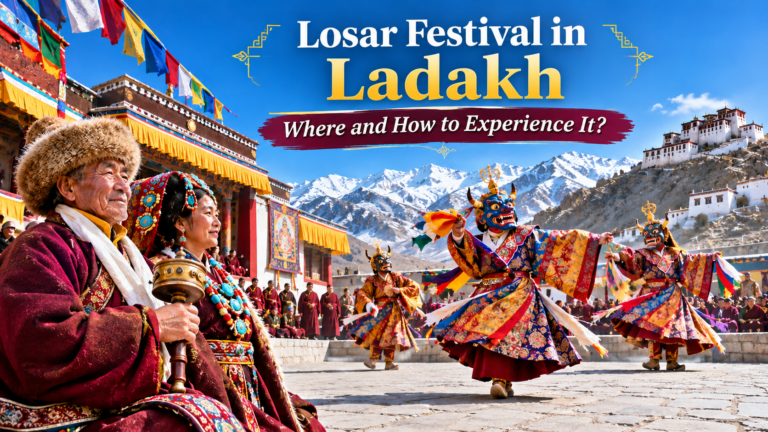
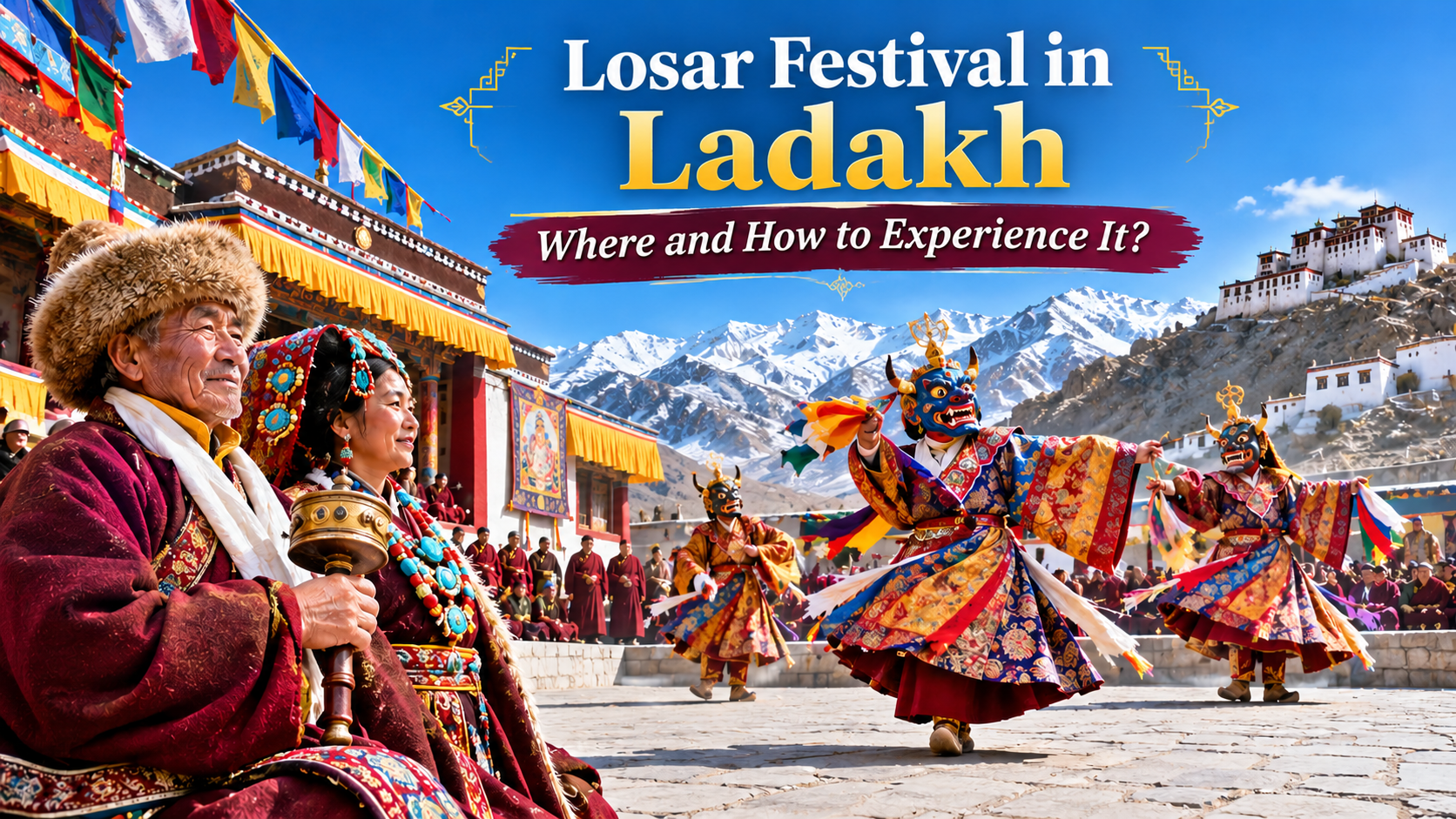
Imagine waking up in the beautiful mountains of Ladakh, where the air is cold, traditional homes are decorated, families are preparing special food, and everyone is getting ready to welcome a brand-new year. Prayer flags flutter in the mountain breeze, monasteries come alive with prayers, and the sound of traditional music fills the surroundings.
This is the magic of the Losar Festival in Ladakh!
Celebrated as the Ladakhi New Year, Losar is one of the most important cultural festivals in the region. It is a time for new beginnings, family gatherings, prayers, traditional food, music, and age-old customs. Unlike regular New Year celebrations, Losar offers visitors a closer look at Ladakh’s Buddhist heritage and the everyday traditions of its people.
If you are planning a winter trip to Ladakh, experiencing Losar in 2026 can be a wonderful way to explore the region beyond its famous landscapes and adventure activities.
In this blog, we will cover everything you need to know about Losar Festival 2026 in Ladakh, including its date, history, cultural significance, best places to celebrate, traditional food, local experiences, travel tips, and how to plan your trip.
Let’s explore!
Table of Contents
Losar Festival 2026: Date, Location and Key Details
If you are wondering when to visit Ladakh for Losar, here is the important information.
| Quick Facts | Details |
| Festival Date | 9 December 2026 |
| Day | Wednesday |
| Main Celebration Location | Leh, Ladakh |
| Other Celebration Areas | Nubra Valley and various villages across Ladakh |
| Festival Type | Cultural and religious |
| Duration | Celebrations traditionally extend over several days, with some customs continuing for around 15 days. |
Ladakh celebrates Losar, with Leh becoming one of the best places for people to take part in the celebrations.
Usually, the celebrations take place some time before the actual New Year. Families clean their houses, cook special meals, go to the monastery, and prepare for customary events.
Travel tip: You should be in Leh by the 7th or 8th of December so you can acclimatize, get to know the place, and see how the city gets ready for the actual event.
What is Losar Festival? Understanding Its History and Significance
The word Losar comes from two Tibetan words:
Lo means year.
Sar means new.
Together, Losar means New Year.
Buddhist communities in the Himalayan region of Ladakh, Tibet, Bhutan, and parts of Nepal celebrate this occasion with great enthusiasm. However, there are some specific rites and practices unique to the Losar festival in Ladakh.
Losar is not just a celebration of the new year for the Ladakhis. Rather, it is a time to shed negativity, show gratefulness to God, pray for good harvest, connect with family, and usher in happiness and prosperity.
The festival is a testimony to the deep-rooted bond of the Ladakhis, their Buddhism, and their relationship with the environment and community.
Why is Losar So Important in Ladakh?
There are several reasons why this festival holds such a special place in Ladakhi culture.
- A new start: Losar symbolizes a new storyline that helps start the year positively.
- Spiritual significance: People come to monasteries to pray for peace, happiness, and prosperity.
- Family values: Family members and friends come close to each other to send greetings and enjoy food together.
- Cultural legacy: Traditional dresses, folk music, dances, and rituals preserve the cultural heritage of Ladakh.
- Good luck: There are special signs, offerings, and prayers that guarantee good fortune in the next year.
For travellers, this is an opportunity to understand Ladakh through its people and traditions rather than just its mountains and tourist attractions.
How is Losar Festival Celebrated in Ladakh?
The fact that Losar is a multi-faceted celebration is one of its main advantages. This means that it is not only about one particular celebration or one specific location.
Some tasks like cleaning one’s house, making food, or visiting a monastery and family have a very special cultural/spiritual significance.
Here are some interesting traditions you may experience during Losar 2026.
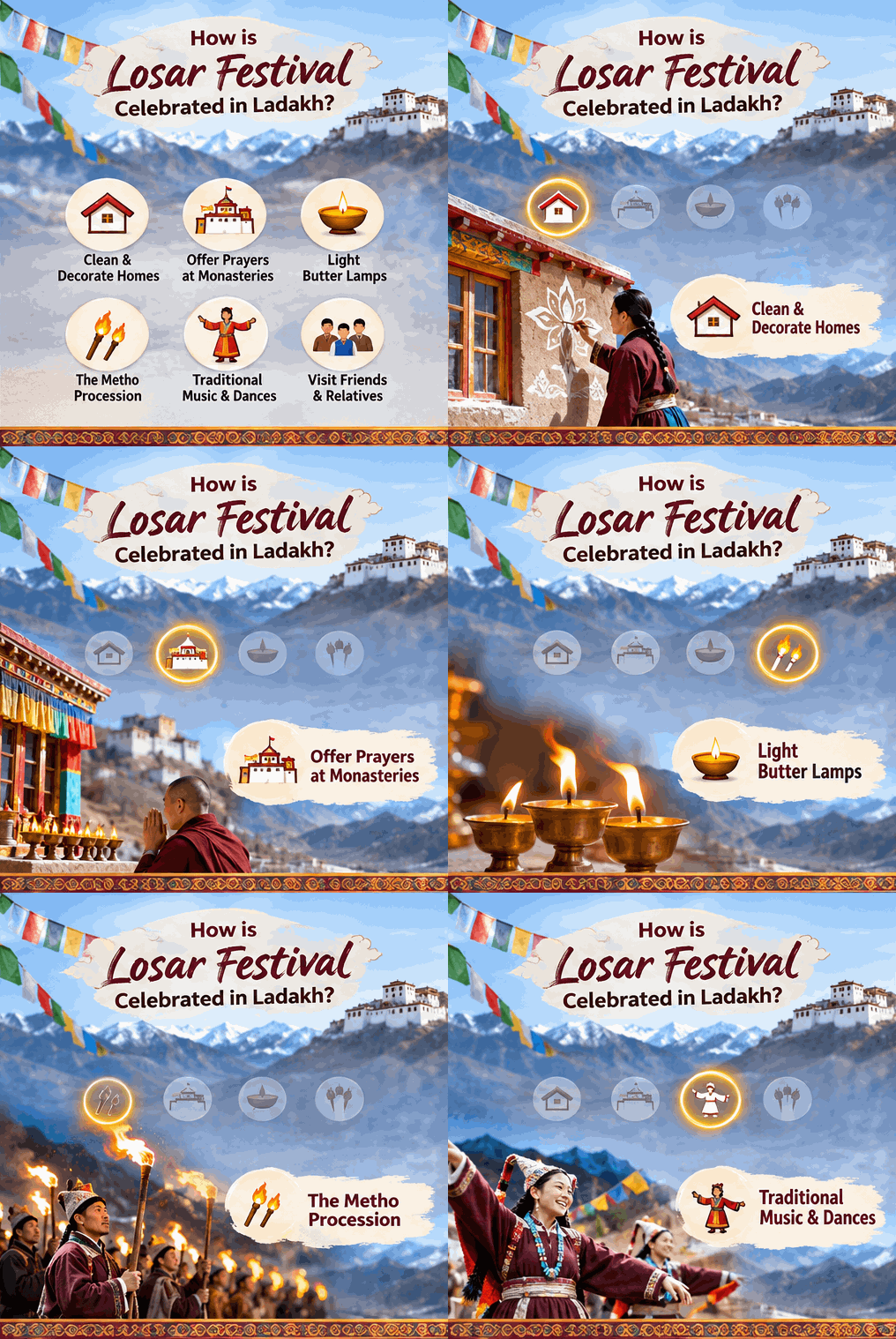
Cleaning and Decorating Homes
Prior to the commencement of the New Year, preparations for Losar take place.
The members of the family clean their residences, set up prayer arrangements, and adorn various parts of the buildings. Different symbols and designs are applied to the kitchen walls using flour.
The practices of placing colourful prayer flags and traditional decorations are common in homes.
The idea is simple: welcome the New Year with a clean space, positive energy and good wishes.
Offering Prayers at Monasteries
Prayer plays an essential role in the Losar festival.
During this time, people visit Buddhist monasteries, light butter lamps, and offer prayers for the happiness, prosperity, and well-being of their families.
During the celebrations, monasteries and household shrines serve as important places of worship.
As a visitor, you may want to visit monasteries and get a glimpse of what goes on there. However, you must remain quiet and follow all the rules put in place by temples.
Lighting Butter Lamps
Butter lamps are an integral part of Buddhist prayer services.
Their lighting signifies wisdom, positivity, and the elimination of darkness during the festivities of Losar. These lamps are placed at home altars and holy places.
Warm, illuminating lights make up a nice ambiance during cold winter evenings in Ladakh.
The Metho Procession
An interesting custom that exists with respect to the Ladakhi New Year is the Metho procession.
During this celebration, individuals tread through communities while holding lit torches and reciting chants. The Metho procession is associated with the expulsion of negativity and the ushering in of a new era of peace and prosperity.
It is a wonderful cultural experience to participate in, although it is worth noting that the way in which the Metho procession is organized varies slightly between different ethnic groups.
Traditional Music and Folk Dances
What is a festival without music and dance?
During Losar, traditional songs and folk dances bring families and communities together. People wear traditional Ladakhi clothes, sing local songs and celebrate with their loved ones.
Some performances may take place in community spaces or as part of local celebrations. However, visitors should remember that Losar is primarily a community and religious festival, not necessarily a large organised tourist show.
Visiting Friends and Relatives
Losar is also a time for strengthening relationships.
Families visit relatives, neighbours and friends, exchange greetings and share festive meals. Guests are welcomed with warmth and traditional hospitality.
If you get an opportunity to experience Losar with a local family, you will probably discover a side of Ladakh that ordinary sightseeing trips rarely offer.
Best Places to Experience Losar Festival in Ladakh
If you are travelling to Ladakh specifically for Losar, choosing the right places to visit can make your experience even more memorable.
Although the festival is celebrated throughout Ladakh, some destinations offer better opportunities to explore its cultural and religious traditions.
Here are the places worth adding to your Losar travel itinerary.
Leh – The Best Base for Losar Celebrations
Leh should be your first choice if you want to experience Losar Festival in Ladakh.
As the region’s main town, Leh is a convenient base for exploring local celebrations, monasteries, markets and traditional neighbourhoods.
During Losar, you can:
- Explore traditional Ladakhi homes and neighbourhoods.
- Observe local New Year preparations.
- Visit Buddhist monasteries and offer prayers.
- Experience traditional food and local hospitality.
- Explore Leh Market and shop for Ladakhi handicrafts.
- Speak with local residents to understand the festival’s traditions.
Why visit Leh?
It offers a good balance of cultural experiences, accommodation options, restaurants, and transport facilities.
Thiksey Monastery – Experience Ladakh’s Buddhist Heritage
Located around 19 kilometres from Leh, Thiksey Monastery is one of the most beautiful monasteries in the region.
The monastery is famous for its impressive architecture, large Maitreya Buddha statue and peaceful surroundings.
During your Losar trip, you can visit Thiksey to understand Buddhist prayer traditions, explore its prayer halls, and admire the beautiful Himalayan landscape.
It is important to note that a visit during Losar does not automatically mean a special public ceremony or dance performance will take place here. Check the monastery’s schedule before visiting.
Hemis Monastery – Explore Ladakh’s Spiritual Side
Located approximately 45 kilometres from Leh, Hemis Monastery is one of the most famous Buddhist monasteries in Ladakh.
It is particularly well-known for the annual Hemis Festival, which takes place during summer.
Even though the famous Hemis mask dance festival is not held during Losar, visiting the monastery in December can offer a quieter and more peaceful experience.
You can explore its traditional architecture, prayer halls, and Buddhist artefacts while learning more about the spiritual heritage of Ladakh.
Diskit Monastery – Discover Nubra Valley’s Culture
If weather and road conditions allow, consider visiting Diskit Monastery in Nubra Valley.
It is one of the oldest and most important monasteries in the valley and is famous for its magnificent Maitreya Buddha statue.
A visit here can give you a glimpse into the religious and cultural life of Nubra Valley.
However, December travel to Nubra requires additional planning because mountain roads can experience snow and ice. Always check road conditions before leaving Leh.
Local Villages Around Leh – Experience Authentic Losar Traditions
If you want to experience Losar beyond the popular tourist attractions, spend some time in villages around Leh.
Local villages offer a wonderful opportunity to understand how families celebrate the Ladakhi New Year.
You may get to see:
- Traditional decorations and household rituals.
- Families preparing festive dishes.
- Local prayer practices.
- Traditional clothing and cultural customs.
- Community gatherings and celebrations.
Some villages to consider include Shey, Stok, Choglamsar, and Saboo.
My suggestion: Stay in a local homestay and ask your host whether you can observe any Losar preparations. Always seek permission before entering homes or photographing people.
Traditional Food to Try During Losar Festival
No Ladakhi celebration is complete without traditional food!
During Losar, families prepare special dishes and enjoy meals together. Food is an important part of the celebration because it brings people together and reflects the region’s local ingredients and culinary traditions.
Here are some Ladakhi dishes you should try during your visit.
Skyu
Skyu is a traditional Ladakhi dish made with small pieces of dough cooked with vegetables in a thick, comforting gravy.
It is especially enjoyable during the winter months because it is warm, filling, and satisfying.
Thukpa
Thukpa is a popular noodle soup enjoyed across the Himalayan region.
It is generally prepared with noodles, vegetables, and sometimes meat. A hot bowl of thukpa is perfect after spending time outdoors in the cold weather.
Khambir
Khambir is a traditional Ladakhi whole-wheat bread with a thick, round shape.
It is commonly enjoyed with butter tea, vegetables, and other local dishes.
Butter Tea (Gur Gur Chai)
Butter tea is one of the most interesting things to try in Ladakh.
Made using tea leaves, butter, salt, and traditionally churned ingredients, this drink has a rich and savoury taste. It is commonly served in Ladakhi households and is particularly comforting during cold winter days.
Momos
Momos are steamed dumplings filled with vegetables or meat. Although they are popular across the Himalayan region, they are also a favourite food among visitors exploring Ladakh.
Try them with a spicy local chutney for a delicious snack.
Foodie tip: Don’t just eat at restaurants. If you are staying at a homestay, ask your host whether they prepare traditional Ladakhi meals during Losar. It can be one of the most memorable parts of your trip.
What to Wear During Losar in Ladakh?
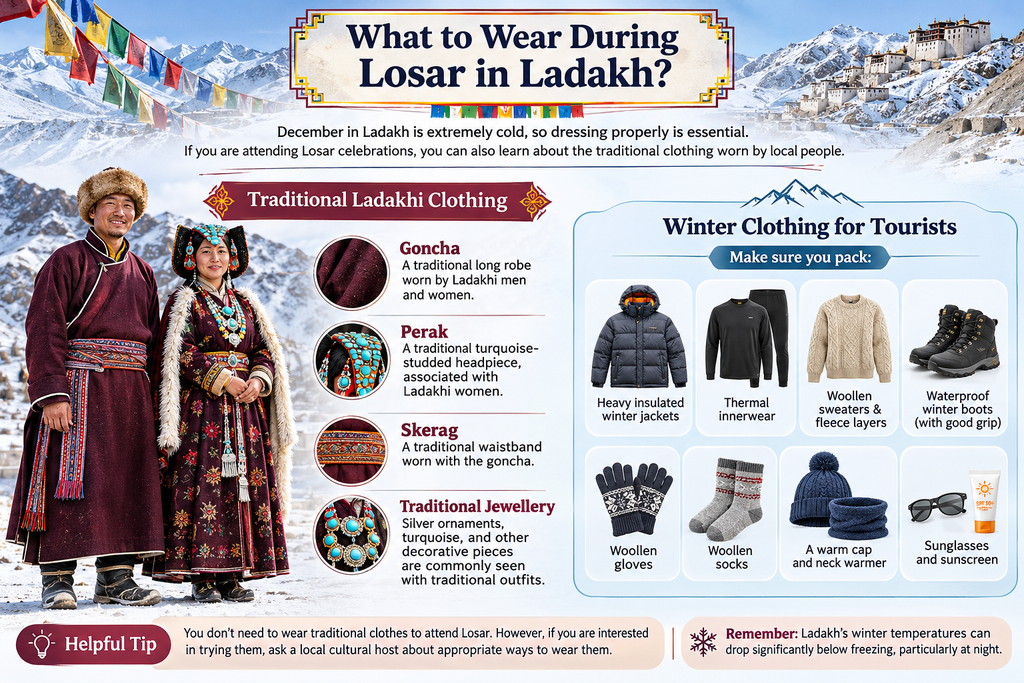
December in Ladakh is extremely cold, so dressing properly is essential.
If you are attending Losar celebrations, you can also learn about the traditional clothing worn by local people.
Traditional Ladakhi Clothing
- Goncha: A traditional long robe worn by Ladakhi men and women, often styled differently.
- Perak: A traditional turquoise-studded headpiece associated particularly with Ladakhi women’s attire.
- Skerag: A traditional waistband worn with the goncha.
- Traditional jewellery: Silver ornaments, turquoise, and other decorative pieces are commonly seen with traditional outfits.
You do not need to wear traditional clothes to attend Losar. However, if you are interested in trying them, ask a local cultural host about appropriate ways to wear them.
Winter Clothing for Tourists
Make sure you pack:
- Heavy insulated winter jackets
- Thermal innerwear
- Woollen sweaters and fleece layers
- Waterproof winter boots with good grip
- Woollen socks and gloves
- A warm cap and neck warmer
- Sunglasses and sunscreen
Remember, Ladakh’s winter temperatures can drop significantly below freezing, particularly at night.
How to Plan Your Losar Festival Trip to Ladakh?
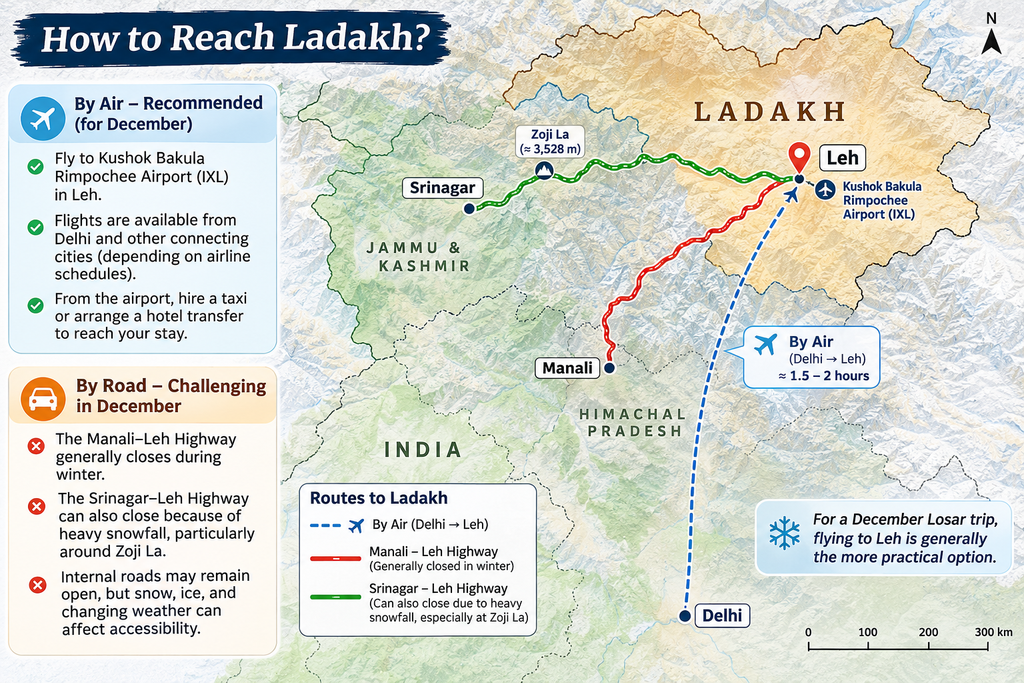
Planning a trip to Ladakh in December is very different from visiting during summer.
The weather is colder, tourist activity is quieter, and some mountain routes may become difficult to access. However, this is also what makes a winter visit special.
Here is how you can plan your Losar Festival trip.
How to Reach Ladakh?
By Air
The easiest way to reach Ladakh in December is by flight.
You can fly to Kushok Bakula Rimpochee Airport in Leh. Flights are available from Delhi and other connecting cities, depending on airline schedules.
From the airport, you can hire a taxi or arrange a hotel transfer to reach your accommodation.
By Road
Travelling to Ladakh by road in December is challenging. We recommend to take a rental car service instead of taking you own car to the festival.
- The Manali-Leh Highway generally closes during winter.
- The Srinagar-Leh Highway can also close because of heavy snowfall, particularly around Zoji La.
Internal roads may remain open, but snow, ice, and changing weather can affect accessibility.
For a December Losar trip, flying to Leh is generally the more practical option.
Where to Stay During Losar?
Accommodation planning is important because many hotels and guesthouses operate seasonally.
Here are some options to consider:
- Hotels in Leh: A convenient choice for travellers who prefer comfortable facilities and easy access to markets and restaurants.
- Local homestays: Ideal if you want to understand Ladakhi traditions and experience local hospitality.
- Guesthouses: A good option for budget-conscious travellers, provided they are open during December.
Book your stay in advance and confirm that heating, hot water, meals, and transport arrangements are available.
If experiencing Losar is your main priority, I would recommend staying in or around Leh rather than choosing a remote destination as your base.
Acclimatise Before Exploring
Ladakh is situated at a high altitude, and arriving there without proper acclimatisation can cause altitude sickness.
The official Ladakh Tourism advisory recommends at least 48 hours of complete rest after arriving in Leh before travelling to higher-altitude areas.
During this period:
- Avoid strenuous activities
- Drink enough water
- Avoid travelling to high mountain passes
- Get proper rest
Watch for symptoms such as headaches, nausea, dizziness, and unusual breathlessness.
Seek medical attention if you feel unwell.
Keep Your Itinerary Flexible
Winter weather can change quickly in Ladakh.
Your travel plans should have enough flexibility to accommodate road closures, flight delays, and changes in local festival schedules.
Don’t try to cover every famous attraction in a short trip. Focus on Leh, local villages, monasteries, and cultural experiences.
Essential Travel Tips for Experiencing Losar Festival 2026
Before packing your bags, keep these practical tips in mind.
- Book flights and accommodation early.
- Carry cash since smaller shops and remote areas may not accept online payment due to limited connectivity.
- Check the weather and road conditions.
- Respect local traditions.
- Ask permission before photographing people.
- Dress respectfully when visiting monasteries.
- Avoid disturbing prayer ceremonies.
- Follow local instructions.
- Do not enter private homes without an invitation.
- Carry personal medication, a basic first-aid kit, a power bank, and warm clothing.
Also remember that medical facilities become limited as you travel farther from Leh.
Why Should You Experience Losar Festival in Ladakh at Least Once?
There are plenty of reasons to add Losar to your travel bucket list.
For starters, it gives you an opportunity to experience Ladakh during a completely different season.
Most travellers visit Ladakh during summer for road trips, mountain views, trekking, and adventure activities. But winter reveals another side of the region.
Here is what makes Losar special:
- Authentic cultural experiences: You can learn about traditional Ladakhi customs directly from local communities.
- Spiritual atmosphere: Monastery visits, prayers, and butter lamps create a peaceful, festive environment.
- Traditional cuisine: You get to enjoy local dishes and warm winter meals.
- Beautiful winter scenery: Snow-covered mountains and quiet villages create unforgettable views.
- Local hospitality: Family gatherings and community celebrations offer a chance to connect with Ladakhi culture.
- Fewer summer crowds: December is generally a quieter tourism period than the summer months.
If you enjoy cultural tourism, photography, local food, and meaningful travel experiences, Losar is worth considering.
Make Your Winter Trip to Ladakh Special with Losar 2026
Losar Festival is one of those celebrations that allows you to understand a destination beyond its famous tourist attractions.
It is about people, traditions, spirituality, food, family, and the happiness of welcoming a new beginning.
If you are planning a trip to Ladakh in December 2026, try to be there around 9 December to experience the Ladakhi New Year.
Visit its beautiful monasteries, explore traditional villages, taste local food, and take time to understand the customs that make this festival so special.
And most importantly, don’t just travel to Ladakh to see Losar. Travel to experience it!
So, are you ready to welcome the New Year in the beautiful mountains of Ladakh? Start planning your winter getaway and experience the magic of Losar 2026.