
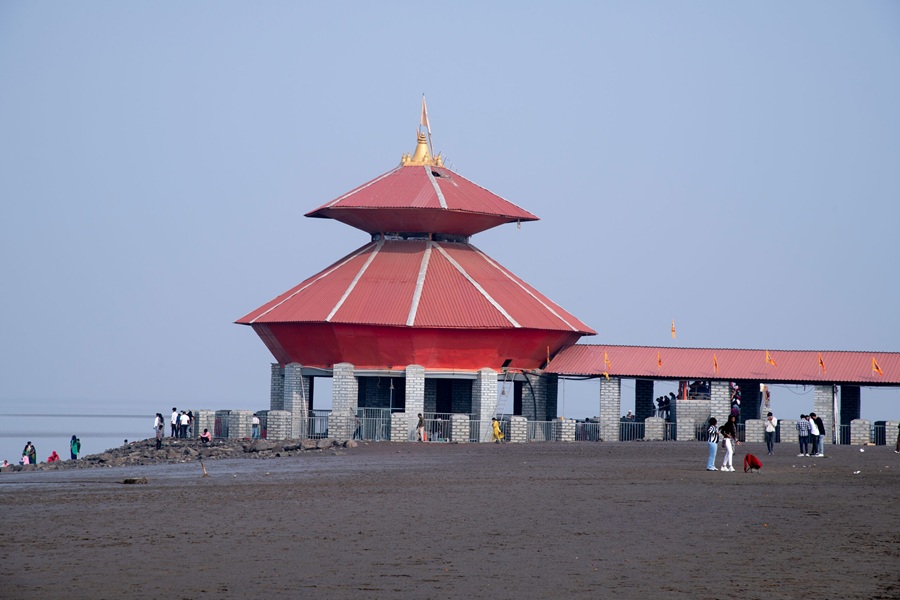
India is a land of extraordinary temples, each carrying deep spiritual meaning and unique architectural beauty. Among them, there is one temple that stands apart not just for its religious importance but for a rare natural phenomenon that makes it appear and disappear every single day. This is the famous Stambheshwar Mahadev Temple in Gujarat, often called India’s “disappearing temple.”
Located in the quiet coastal village of Kavi Kamboi in Gujarat, this temple is dedicated to Lord Shiva and is known for its unbelievable interaction with the sea tides. At certain times of the day, the Arabian Sea completely covers the temple, and at other times, it reveals it again to devotees. This magical cycle has made it one of the most fascinating pilgrimage sites in India.
Table of Contents
The Mystery of the Disappearing Temple
What makes Stambheshwar Mahadev Temple truly special is its natural rhythm with the sea. During high tide, seawater from the Arabian Sea rises and slowly engulfs the entire temple. Within a short time, the structure disappears beneath the waves, leaving only the flag and the top portion visible for a while. Then, as the tide moves back, the temple gradually reappears, standing once again on the shore as if it had never vanished.
This phenomenon happens twice every day and is completely controlled by tidal patterns rather than any human intervention. For visitors, witnessing this transformation feels almost unreal. One moment you are standing inside a temple offering prayers, and the next moment you are watching it being swallowed by the ocean.
Spiritual Importance of Stambheshwar Mahadev Temple
While the natural phenomenon attracts tourists, the temple holds deep spiritual importance for devotees of Lord Shiva. It is believed that the Shiva Linga inside the temple is self-manifested, which means it was not installed by humans but appeared naturally. This belief increases the sanctity of the site among pilgrims.
Locals strongly believe that Lord Shiva protects the temple from the powerful sea waves and that the disappearing act is a divine play of nature. Many devotees visit the temple during important Hindu festivals like Mahashivratri, when prayers and rituals are performed with great devotion.
For many people, visiting this temple is not just a travel experience but a spiritual journey. The sight of a sacred place merging with nature creates a feeling of humility and connection with something greater than human existence.
Location and How the Temple is Built
The Stambheshwar Mahadev Temple is located near Kavi Kamboi village in Gujarat, close to the Arabian Sea coastline. The temple is built in such a way that it sits right at the point where land meets sea. This unique positioning is what allows the tides to interact so closely with the structure.
The temple architecture is simple compared to grand Indian temples, but its simplicity is part of its beauty. The real attraction is not the carvings or structures but the environment itself. The sound of waves, the salty air, and the constant movement of water make it a living temple that changes every few hours.
Best Time to Visit the Temple
Planning your visit to Stambheshwar Mahadev Temple requires a little attention because the temple does not follow fixed visiting hours. Instead, it follows the rhythm of the sea. The best time to visit is during low tide when the temple is fully visible and accessible for darshan.
The perfect season to travel here is between October and March, when the weather in Gujarat is pleasant and comfortable for sightseeing. Summers can be extremely hot, which sometimes makes outdoor travel difficult, while the monsoon season brings heavy tides that may reduce accessibility.
Since tide timings change daily, visitors often check local updates before planning their trip. Many travelers even wait near the temple area to witness both phases of the temple disappearing and reappearing, which is the highlight of the visit.
Comfy Rides for Smooth Journey
How to Reach Stambheshwar Mahadev Temple
Bharuch is the nearest major city to the temple, and most travelers use it as a base point.
- By Air: Nearest airport: Vadodara Airport. From there, you can hire a taxi or take a bus to the temple area.
- By Train: Nearest railway station: Bharuch Railway Station. From Bharuch, the temple is around 70 to 80 km away by road.
- By Road: The temple is well-connected via Gujarat state highways. Taxis and private vehicles are the most convenient options.
The temple is located in a small coastal village, so the final stretch involves rural roads, which are scenic but narrow.
What to Expect During Your Visit
- Visiting this temple is not like a regular temple trip. Here’s what you should expect:
- You may see the temple slowly getting covered by seawater. This is completely natural and happens every day.
- The area around the temple can be muddy and slippery, especially during low tide.
- Most visitors rush during low tide, so expect moderate crowds during peak hours.
- Despite its popularity, the temple still maintains a calm and spiritual atmosphere.
Read More: Padmanabhaswamy Temple – History and Timings
Local Beliefs and Mythology
Like many ancient temples in India, Stambheshwar Mahadev Temple is surrounded by mythology and local beliefs. One popular legend says that the temple was connected to the time of the Mahabharata, and it was either built or blessed by the Pandavas during their exile.
Another belief is that Lord Shiva himself resides here in a powerful form and controls the movement of the sea around the temple. Locals often say that the disappearing temple represents the cosmic power of Shiva, symbolizing creation, destruction, and rebirth in a continuous cycle.
Whether one views it through a scientific lens or a spiritual perspective, the experience remains equally powerful and thought-provoking.
Nearby Places to Explore
If you are traveling to this part of Gujarat, you can also explore nearby attractions:
- Coastal Villages of Gujarat: Small fishing villages offer a glimpse of traditional coastal life.
- Bharuch City Attractions: Bharuch is one of the oldest cities in India and has historical significance, temples, and local markets.
- Narmada River Area: The nearby river belt is known for its scenic beauty and peaceful surroundings.
- Dahej Industrial Region: A modern industrial hub that contrasts sharply with the rural coastal landscape.
Travel Tips for Visitors
To make your trip smooth and safe, keep these tips in mind:
- Always check tide timings before visiting.
- Wear comfortable and waterproof footwear.
- Avoid visiting during high tide.
- Carry drinking water and light snacks.
- Keep your belongings safe from seawater.
- Respect the religious customs of the temple.
If you are visiting with family, ensure children stay close due to slippery areas.
Stambheshwar Mahadev Temple is not just a religious site; it is a rare meeting point between nature and spirituality. The sight of a temple disappearing into the sea and reappearing again is something that cannot be easily described. It has to be experienced.
For travelers, it offers a unique combination of devotion, natural wonder, and peaceful surroundings. For devotees, it is a sacred place filled with divine energy. And for everyone who visits, it becomes a memory that lasts a lifetime.
If you are traveling to Gujarat, this disappearing temple deserves a place on your itinerary. It is one of those rare destinations where faith and nature come together in the most extraordinary way.