For a long time, companies believed that managing employee transportation meant owning a fleet of cars, vans, or buses. Vehicles were purchased, drivers were hired, maintenance was scheduled, and an internal team handled daily transportation operations.
But corporate mobility is changing.
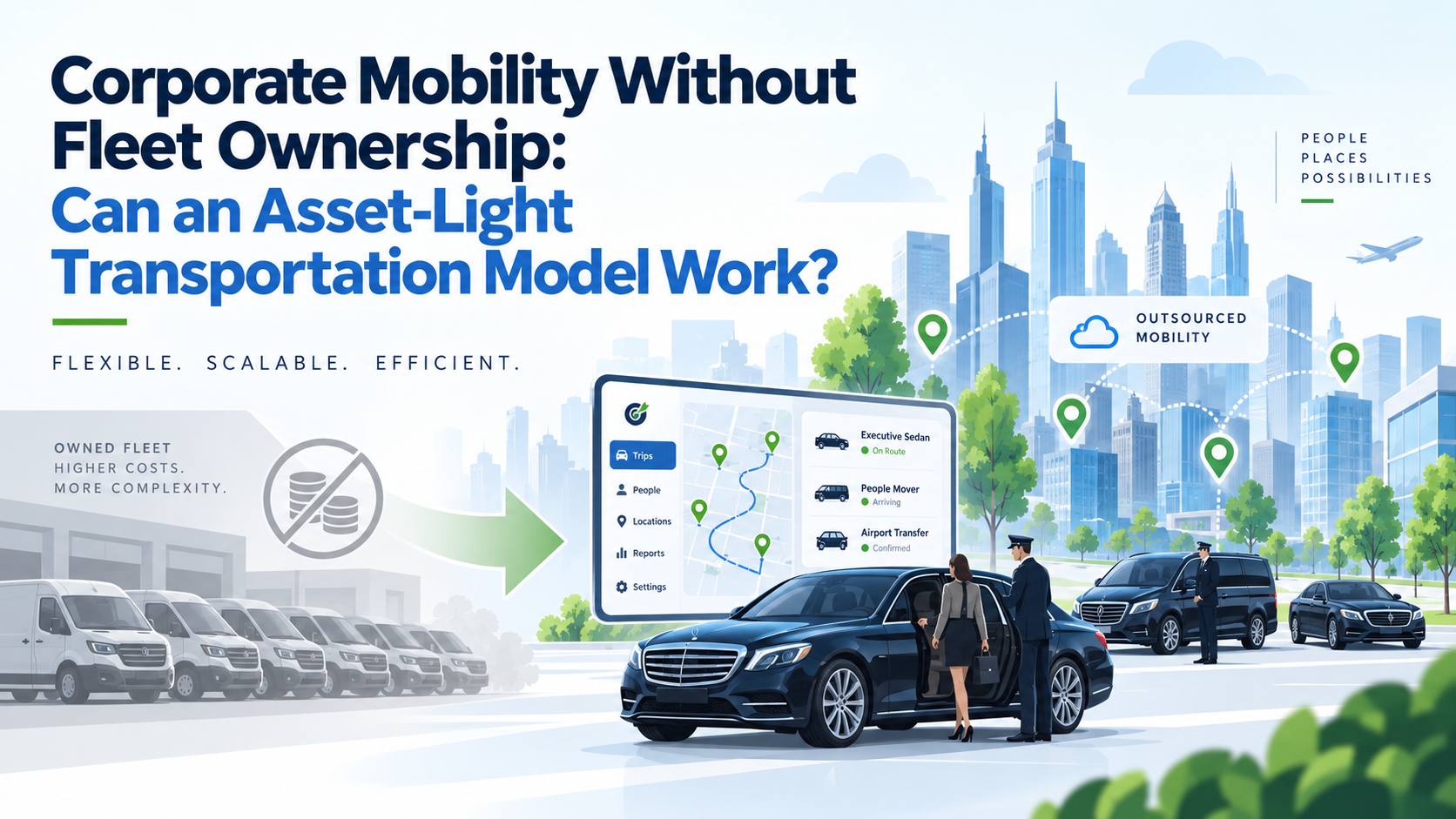
Today, businesses are looking for ways to provide reliable employee transportation without taking on the cost and responsibility of owning a large fleet. This has led to the growth of the asset-light transportation model, where companies use professional transportation providers instead of investing heavily in vehicles.
The idea is simple: use transportation when you need it without necessarily owning all the assets required to provide it.
But can this model actually work for corporate transportation? In many cases, yes. However, its success depends on the company’s travel requirements, locations, employee schedules, and transportation partner.
Table of Contents
What is an Asset-Light Transportation Model?
An asset-light transportation model allows a company to provide mobility services without owning a large number of vehicles.
Instead of purchasing and maintaining an entire fleet, a business works with corporate transportation providers that supply vehicles, professional drivers, technology, and operational support.
For example, a company may need 50 vehicles during its busiest period but only 20 during quieter months. Owning 50 vehicles means paying for all of them throughout the year.
With an asset-light approach, the company can arrange additional vehicles when demand increases.
This creates greater flexibility while reducing the capital investment associated with traditional fleet ownership.
Why Are Companies Moving Away From Fleet Ownership?
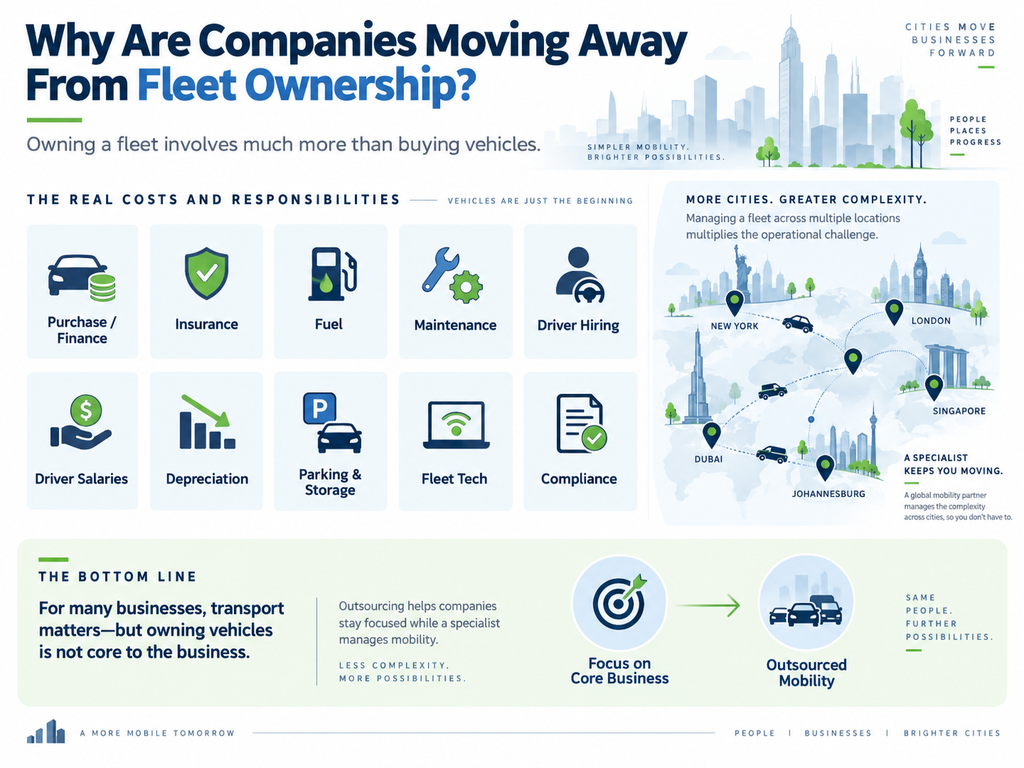
Owning a fleet involves much more than buying vehicles. Businesses have to consider:
- Vehicle purchase or financing costs
- Insurance
- Fuel
- Maintenance and repairs
- Driver recruitment
- Driver salaries
- Vehicle depreciation
- Parking and storage
- Fleet management technology
- Compliance and administration
These responsibilities can become complicated when a company operates across multiple cities.
For many businesses, transportation is important, but owning vehicles is not part of their core business. Outsourcing can allow them to focus on their primary operations while a professional provider manages mobility.
Lower Capital Investment
One of the biggest advantages of an asset-light corporate transportation model is reduced capital expenditure.
Purchasing a fleet requires a significant upfront investment. Vehicles also lose value over time and eventually need to be replaced. With outsourced transportation, companies can convert some of these fixed costs into operating expenses.
Instead of asking, “How many vehicles should we buy?”, transportation managers can ask, “How many vehicles do we actually need this month?”
This change can make corporate mobility easier to scale.
Flexibility During Changing Demand
Employee transportation demand is rarely the same throughout the year.
A company may need more vehicles during:
- New employee onboarding
- Corporate events
- Conferences
- Business expansion
- Seasonal projects
- Office relocations
- Shift changes
An owned fleet may sit underused during periods of low demand. An asset-light transportation model provides the flexibility to increase or reduce capacity according to business requirements.
This makes it particularly useful for companies with unpredictable or seasonal corporate mobility needs.
Access to Professional Drivers
Fleet ownership also means managing drivers. Recruiting, training, scheduling, retaining, and supervising drivers can take considerable time.
A professional corporate transportation service can take care of these responsibilities as part of its offering. Businesses can gain access to trained drivers without having to build a large internal driver workforce.
This can be especially valuable for executive transportation, airport transfers, client travel, and employee shuttle services.
Technology Without Building Everything In-House
Modern corporate mobility depends heavily on technology. Companies want visibility into bookings, vehicle locations, trip status, driver information, and transportation spending.
Building an entire transportation technology system internally can require considerable investment.
Many transportation providers already use tools such as:
- Online booking platforms
- GPS tracking
- Automated trip notifications
- Digital billing
- Route optimization
- Fleet management dashboards
- Transportation reporting
By partnering with the right provider, companies can access these capabilities without developing and maintaining every system themselves.
Can It Reduce Corporate Transportation Costs?
An asset-light model does not automatically mean every trip will be cheaper. Its value comes from improving the total cost of corporate transportation.
Companies can potentially reduce costs associated with:
- Vehicle depreciation
- Fleet maintenance
- Idle vehicles
- Driver management
- Vehicle replacement
- Parking and storage
- Fleet administration
There can also be savings from better fleet utilization because vehicles are deployed according to actual demand.
The right comparison is therefore not simply “owned vehicle versus outsourced vehicle.” Companies should compare the total cost of ownership with the total cost of an outsourced transportation model.
What About Service Quality?
This is where choosing the right transportation partner becomes important. An asset-light model works only when the service provider can consistently deliver the required level of service.
Companies should evaluate providers based on:
- Driver quality
- Vehicle condition
- Safety standards
- On-time performance
- Geographic coverage
- Customer support
- Technology
- Backup vehicle availability
- Reporting capabilities
- Pricing transparency
A low-cost provider that cannot provide reliable vehicles during peak demand can create more problems than it solves.
Is Asset-Light Transportation Right for Every Company?
Not necessarily. Companies with highly predictable transportation needs, large campuses, fixed employee routes, or specialized requirements may still benefit from owning or leasing some vehicles.
A hybrid transportation model can be a better option. For example, a company could maintain a small core fleet for regular requirements and use outsourced transportation providers during peak periods.
This provides a balance between control and flexibility.
How to Build an Asset-Light Corporate Mobility Strategy?
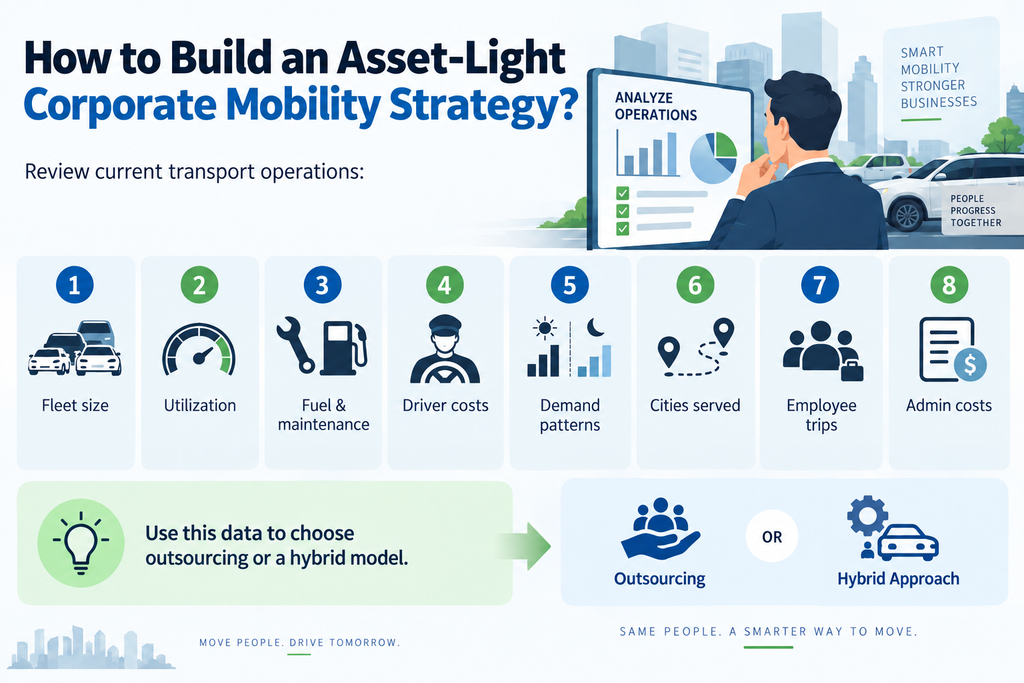
Before moving away from fleet ownership, companies should analyze their current transportation operations.
Start by looking at:
- Number of vehicles currently owned or leased
- Average daily vehicle utilization
- Maintenance and fuel expenses
- Driver-related costs
- Peak and off-peak transportation demand
- Number of cities served
- Average employee trips
- Current transportation administration costs
This information can help determine whether outsourcing or a hybrid approach makes financial and operational sense.
The Future of Corporate Mobility
Corporate mobility is becoming less focused on owning vehicles and more focused on providing reliable transportation outcomes.
Businesses increasingly want mobility as a service, where employees can access the right transportation at the right time without the company having to own every asset involved.
This shift can make corporate transportation more flexible, scalable, and technology-driven. The goal is not to eliminate fleets completely. It is to use vehicles more intelligently and invest company resources where they create the most value.
Conclusion
Corporate mobility without fleet ownership is no longer just an alternative idea. For many businesses, it can be a practical way to manage transportation while reducing capital investment and operational complexity.
An asset-light transportation model can provide access to vehicles, professional drivers, technology, and transportation management without requiring companies to own and maintain a large fleet.
However, the model works best when it is supported by a reliable transportation partner, clear service standards, strong technology, and proper cost analysis.
For companies with changing transportation demand, multiple locations, or a desire to simplify fleet operations, an asset-light or hybrid model can offer a smarter approach to corporate employee transportation.