Managing employee transportation is a major responsibility for large enterprises, especially when employees work in shifts, travel late at night, or need reliable transport to and from office locations. At the same time, senior executives often have very different transportation requirements, including privacy, flexibility, comfort, and dedicated service.
This raises an important question for businesses: Should enterprises outsource employee transportation but own their executive fleet?
For many organizations, the answer can be yes. A combination of outsourced employee transportation services and an in-house executive fleet can offer a practical balance between operational efficiency and executive mobility. However, the right approach depends on the company’s size, locations, travel requirements, and transportation budget.
Table of Contents
Why Enterprises Outsource Employee Transportation?
Employee transportation is more complicated than simply arranging a few cars or buses. Large companies may need to manage hundreds or thousands of daily trips, multiple routes, changing shifts, driver availability, vehicle maintenance, and employee safety.
This is where employee transportation outsourcing can make a significant difference.
When an enterprise works with a professional transportation provider, the service provider can manage much of the day-to-day operation. This may include:
- Employee pickup and drop-off
- Route planning and optimization
- Driver management
- Vehicle scheduling
- GPS tracking
- Transportation helpdesk support
- Shift-based transportation
- Emergency transportation arrangements
- Compliance and safety processes
Instead of maintaining a large internal transportation team, the company can rely on an experienced employee transportation management company to handle these operational requirements.
Cost Efficiency is a Major Advantage
One of the biggest reasons companies consider outsourcing employee transportation is cost control.
Owning and operating a large employee transport fleet involves several expenses. These include vehicle purchases, insurance, fuel, maintenance, driver salaries, replacement vehicles, permits, and administrative costs.
With corporate employee transportation services, many of these expenses can be included in a managed service model.
The company can also adjust transportation capacity based on business requirements. For example, if employee numbers increase, additional vehicles can be added without requiring the company to purchase an entire fleet.
This flexibility can be particularly useful for enterprises operating across multiple offices or cities.
What About Executive Transportation?
Executive transportation is different from regular employee transportation.
Senior executives, board members, visiting clients, and other important guests may require a more personalized experience. Their schedules can change at short notice, and their transportation needs may involve multiple meetings, airports, hotels, and business locations in a single day.
For these requirements, some enterprises prefer to own an executive fleet.
An executive fleet may consist of premium cars driven by trained chauffeurs. Because the vehicles are directly controlled by the organization, the company has greater control over availability, vehicle standards, branding, and service quality.
For executives who travel frequently, having a dedicated vehicle can also reduce the time spent arranging transportation for every individual trip.
Why Owning an Executive Fleet Can Make Sense?
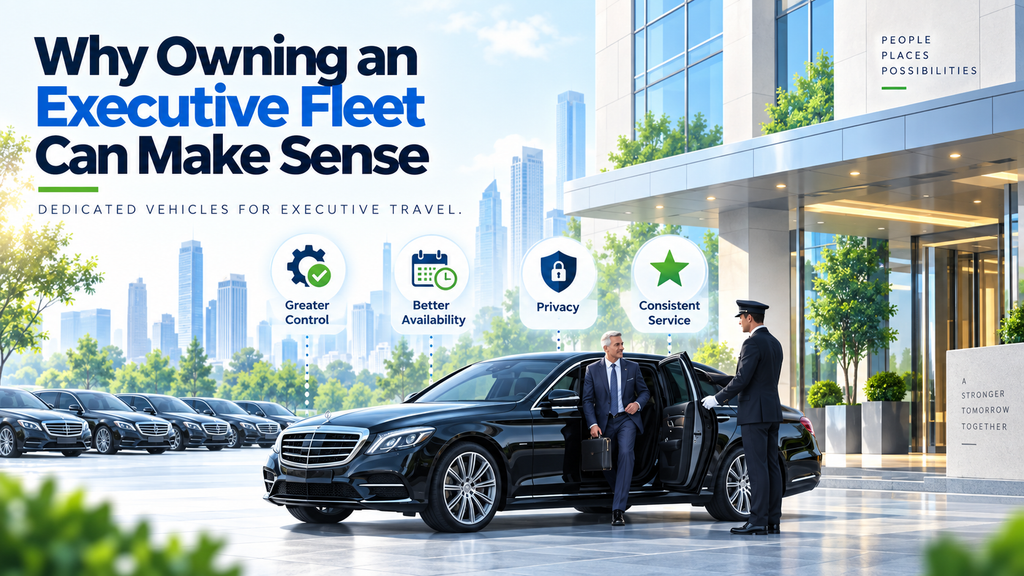
There are several reasons an organization may choose to maintain its own executive cars.
1. Greater Control
With an owned fleet, the company has direct control over vehicle selection, maintenance schedules, chauffeur standards, and usage policies.
This can be valuable when transportation is closely connected to the executive experience.
2. Better Availability
Executives often operate on unpredictable schedules. A meeting may run longer than expected, or an urgent business trip may come up.
A dedicated executive vehicle can be available when required rather than depending entirely on external vehicle availability.
3. Privacy
Privacy can be an important consideration for senior management. Executives may need to discuss confidential business matters while traveling.
Using a dedicated company vehicle can provide a more controlled environment than arranging a different vehicle for every trip.
4. Consistent Service
An enterprise can establish its own standards for executive transportation, from vehicle cleanliness to chauffeur behavior and punctuality.
The company can also train drivers according to its expectations.
But Owning a Fleet Comes With Responsibilities
Owning executive vehicles does not mean the costs disappear. In fact, companies need to carefully evaluate the total cost of fleet ownership.
Expenses can include:
- Vehicle purchase or leasing costs
- Insurance
- Fuel
- Regular servicing
- Repairs
- Chauffeur salaries
- Parking
- Vehicle replacement
- Fleet administration
- Depreciation
There is also the challenge of ensuring that vehicles are properly utilized.
If an executive vehicle spends most of the day parked, the company may be paying for an asset that provides limited value. This is why organizations should examine actual usage before deciding to purchase vehicles.
A Hybrid Transportation Model May Be Practical
For many enterprises, the choice does not have to be completely outsourced or completely in-house.
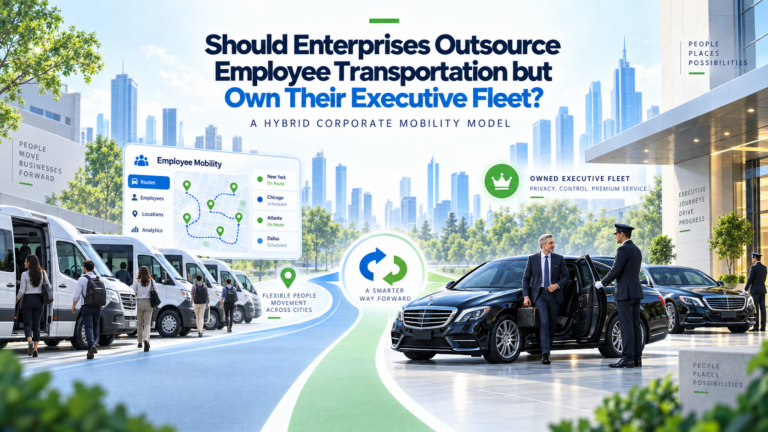
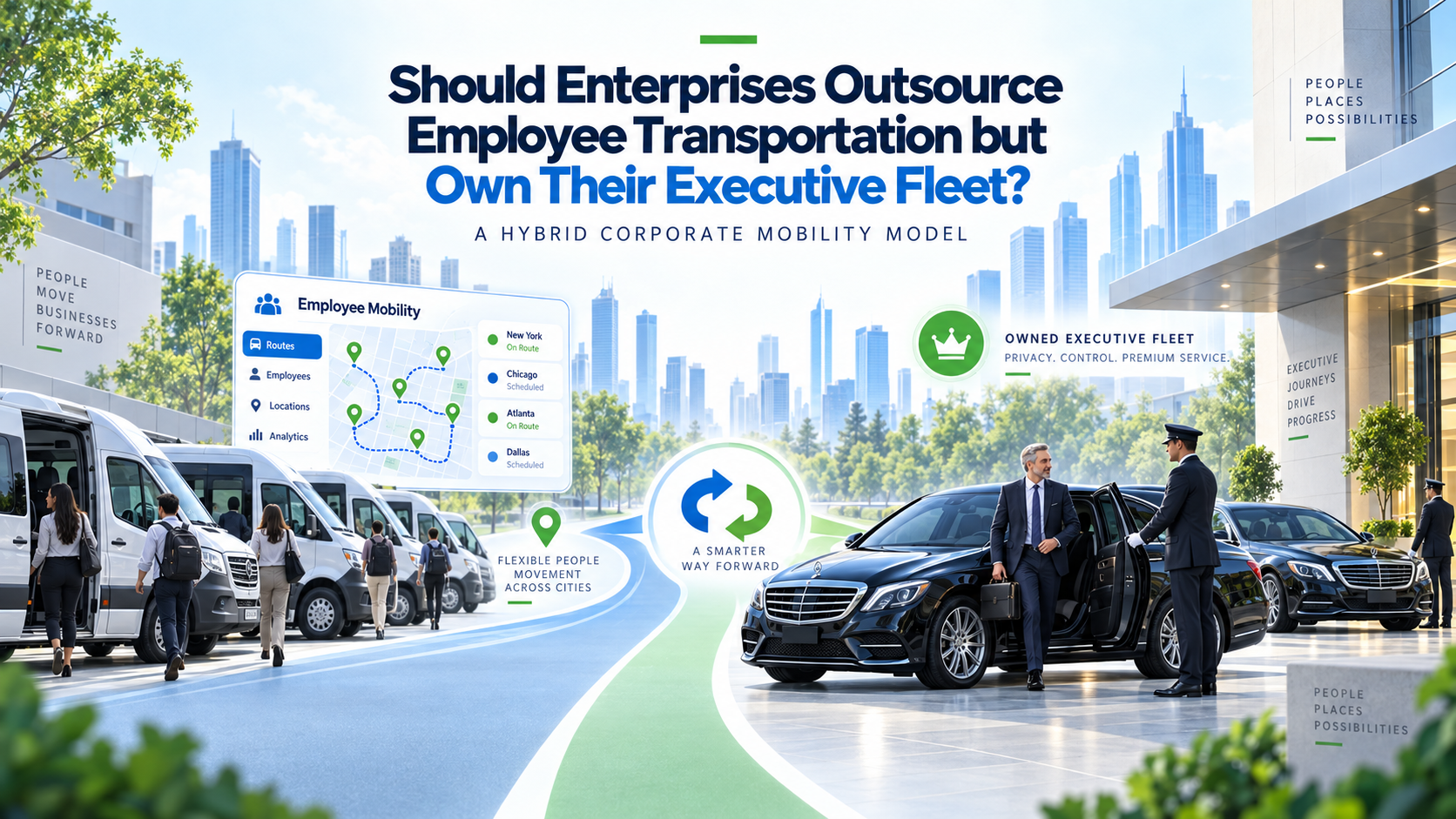
A hybrid employee transportation model can combine both approaches. For example, an enterprise could outsource its regular employee transportation requirements while maintaining a small number of company-owned executive vehicles.
The outsourced provider could handle employee routes, shift transportation, scheduling, tracking, and daily fleet operations. Meanwhile, the internal executive fleet could be reserved for senior leadership, important visitors, airport transfers, and business-critical travel.
This approach allows each transportation category to be managed according to its specific needs.
How Technology Supports Both Models?
- Modern corporate fleet management technology can make transportation easier to monitor, regardless of who owns the vehicles.
- Companies can use transportation management platforms to track vehicles, monitor trips, manage schedules, and analyze transportation costs.
- For outsourced employee transportation, technology can help enterprises monitor service levels and vendor performance.
- For an owned executive fleet, the same type of technology can provide visibility into vehicle utilization, maintenance schedules, driver performance, and operating expenses.
- Data can also help companies identify underused vehicles and unnecessary transportation costs.
What Should Enterprises Consider Before Deciding?
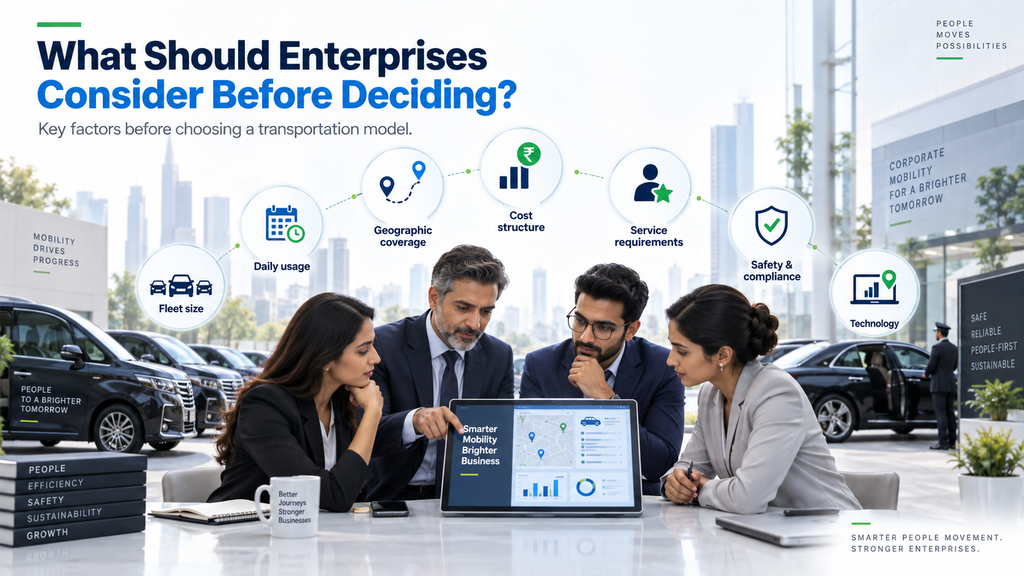
There is no single transportation model that works for every organization. Enterprises should consider several factors before making a decision.
- Fleet size: A large employee fleet can be difficult and expensive to manage internally.
- Daily usage: Companies with frequent executive travel may get more value from dedicated vehicles.
- Geographic coverage: Businesses operating across several cities may find outsourcing more practical for employee transportation.
- Cost structure: Compare outsourcing fees with the complete cost of owning and operating vehicles.
- Service requirements: Executive transportation often requires a higher level of personalization than employee transport.
- Safety and compliance: Transportation providers should be evaluated based on their safety processes, driver standards, vehicle maintenance, and compliance practices.
- Technology: GPS tracking, automated scheduling, route optimization, and reporting can improve transportation visibility.
The Bottom Line
For enterprises, employee transportation and executive transportation serve different purposes. Employee transportation is primarily about scale, reliability, safety, and operational efficiency. Executive transportation is more focused on flexibility, privacy, availability, and personalized service.
Because of these differences, a hybrid model can be worth considering. Outsourcing employee transportation can reduce the operational burden of managing a large fleet, while owning a smaller executive transportation fleet can give companies greater control over critical executive travel.
The key is not simply deciding who owns the vehicles. Enterprises should look at utilization, operating costs, service expectations, employee requirements, and long-term business needs.
For many organizations, the most practical strategy may be to outsource what requires scale and operational management while keeping direct control over transportation that requires a high level of personalization.