







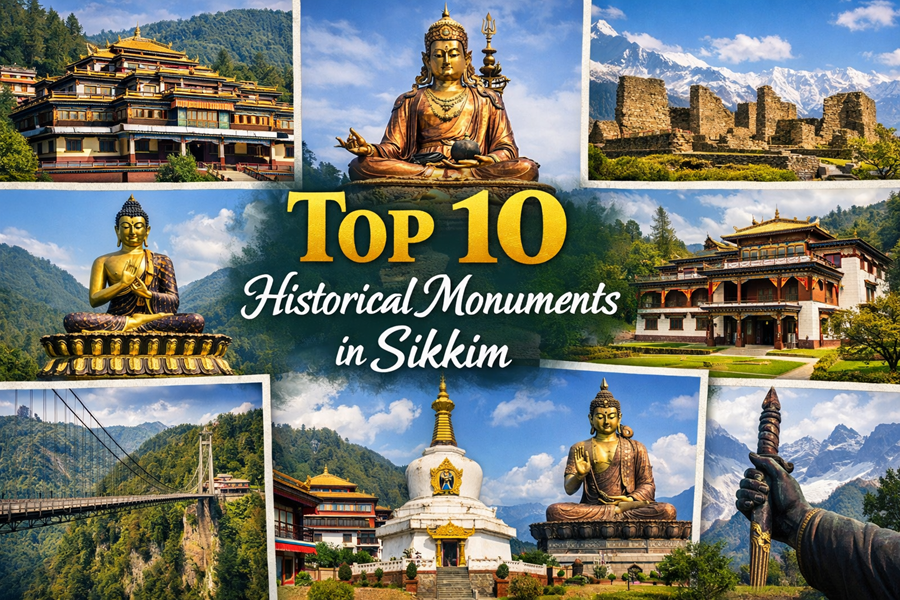
If you are planning a trip to Northeast India, this detailed guide to the Top 10 Historical Monuments in Sikkim in 2026 will help you plan better. Nestled in the lap of the Himalayas, Sikkim is famous for its peaceful monasteries, royal history, Buddhist culture, and breathtaking landscapes.
Unlike other states, Sikkim offers a unique blend of spirituality, ancient traditions, and natural beauty. From centuries-old monasteries to royal palaces and archaeological ruins, every monument here tells a story.
This travel guide includes everything you need, such as how to reach Sikkim, permits, the best time to visit, travel tips, and complete details about each historical monument.
Table of Contents
How to Reach Sikkim in 2026
Before exploring historical monuments in Sikkim, it is important to know the best ways to reach the state.
By Air:
The nearest airport is Pakyong Airport, located about 35 km from Gangtok. Limited flights operate here.
A more convenient option is Bagdogra Airport in West Bengal, around 125 km from Gangtok. From Bagdogra, you can hire a taxi or take a shared cab to Gangtok (4 to 5 hours by road).
By Train:
The nearest railway station is New Jalpaiguri Railway Station (NJP). It is well connected to major Indian cities like Delhi, Kolkata, and Guwahati.
From NJP, taxis and shared jeeps are easily available for Gangtok.
By Road:
Sikkim is well connected by road from Siliguri and Darjeeling. National Highway 10 connects West Bengal to Gangtok.
Private taxis, state buses, and tour operators operate regularly.
Top 10 Historical Monuments in Sikkim in 2026
Now, let’s explore the most important historical monuments every traveler must visit.
1. Rumtek Monastery
Rumtek Monastery is the largest and most significant monastery in Sikkim. Located about 24 km from Gangtok, it serves as the seat of the Karmapa of the Kagyu sect of Tibetan Buddhism. The monastery was originally built in the 16th century and later reconstructed in the 1960s after the Tibetan exile.
The structure is beautifully decorated with colorful murals, golden stupas, intricate thangka paintings, and detailed carvings. Visitors can attend morning and evening prayer ceremonies, which offer a peaceful and spiritual experience. The monastery complex also includes a monk training center and a small museum.
- Location: 24 km from Gangtok
- Timings: 6:00 AM to 6:00 PM
- Entry Fee: Free
- Travel Tip: Visit early in the morning to attend prayer sessions.
2. Pemayangtse Monastery
Located near Pelling, Pemayangtse Monastery is one of the oldest monasteries in Sikkim, built in 1705. It belongs to the Nyingma sect of Tibetan Buddhism and was originally meant only for “pure monks.”
The monastery is a three-storied structure featuring detailed wooden carvings, ancient scriptures, statues, and a beautiful seven-tiered wooden sculpture representing the heavenly palace of Guru Rinpoche. On clear days, visitors can enjoy stunning views of Mount Kanchenjunga from here. The peaceful environment makes it ideal for meditation and photography.
- Location: Near Pelling, West Sikkim (approx. 115 km from Gangtok)
- Timings: 9:00 AM to 5:00 PM
- Entry Fee: Rs. 20 to 30 per person
Comfy Rides for Smooth Journey
3. Rabdentse Ruins
Rabdentse Ruins were the second capital of the Kingdom of Sikkim between 1670 and 1814. Today, it stands as an important archaeological site maintained by the Archaeological Survey of India.
Visitors can see the remains of palace walls, chortens, and stone foundations. The site offers breathtaking views of the surrounding valleys and Mount Kanchenjunga. A short forest walk leads to the ruins to make it a scenic and educational visit. It gives travelers insight into Sikkim’s royal past and historical governance.
- Location: Near Pelling, West Sikkim
- Timings: 8:00 AM to 5:00 PM
- Entry Fee: Rs. 20 for Indian citizens, Rs. 50 for foreign nationals (approx.)
4. Tashiding Monastery
Built in 1641, Tashiding Monastery is one of the holiest monasteries in Sikkim. It is located on a hilltop between the Rathong and Rangeet rivers.
The monastery is famous for the Bumchu festival, during which a sacred pot of water is opened to predict the year’s fortune. The site is surrounded by prayer flags and chortens, creating a spiritual atmosphere. It is less crowded compared to Gangtok monasteries, and it offers a calm and peaceful experience for visitors.
- Location: West Sikkim, about 40 km from Pelling
- Timings: 7:00 AM to 5:00 PM
- Entry Fee: Free
5. Enchey Monastery
Enchey Monastery, located in Gangtok, is over 200 years old. It was built by Lama Druptob Karpo, a well-known tantric master.
The monastery is known for its colorful murals, statues of deities, and traditional Buddhist architecture. Every year, it hosts the Cham dance festival, where monks perform masked dances symbolizing good over evil. The monastery’s peaceful setting and city views make it an easy and rewarding visit for travelers staying in Gangtok.
- Location: 3 km from Gangtok city center
- Timings: 6:00 AM to 4:00 PM
- Entry Fee: Free
6. Tsuklakhang Palace
Tsuklakhang Palace was the residence of the Chogyal, the former king of Sikkim. Located in Gangtok, it reflects the royal history of the state before it became part of India in 1975.
The complex includes the Royal Chapel and beautifully maintained gardens. Though parts of the palace are restricted, visitors can explore designated areas and learn about Sikkim’s monarchy. The architecture is simple yet elegant, which blends traditional and modern elements.
- Location: Gangtok, near Ridge Park
- Timings: 9:00 AM to 5:00 PM (Closed during special royal events)
- Entry Fee: Usually free (restricted areas not open to the public)
7. Do-Drul Chorten
Built in 1945, Do-Drul Chorten is one of the most important stupas in Sikkim. It is surrounded by 108 prayer wheels, which devotees spin while chanting mantras.
The stupa houses sacred relics and religious texts. Located near the Namgyal Institute of Tibetology, it is easy to include in a Gangtok sightseeing tour. The calm surroundings make it ideal for quiet reflection.
- Location: Near Namgyal Institute of Tibetology, Gangtok
- Timings: 8:00 AM to 6:00 PM
- Entry Fee: Free
8. Dubdi Monastery
Dubdi Monastery is the oldest monastery in Sikkim, built in 1701. Located in Yuksom, it requires a short 30 to 40 minute uphill trek.
The monastery played an important role in the coronation of Sikkim’s first king. It is surrounded by forest, which makes it perfect for a peaceful atmosphere and insight into early Sikkimese Buddhism.
- Location: Yuksom, West Sikkim (requires a short uphill trek)
- Timings: 7:00 AM to 5:00 PM
- Entry Fee: Free
Comfy Rides for Smooth Journey
9. Namgyal Institute of Tibetology
Namgyal Institute of Tibetology is a museum and research center dedicated to Tibetan culture and Buddhism.
It houses rare manuscripts, thangkas, statues, coins, and religious artifacts. The institute is an excellent place for travelers who want to understand Sikkim’s cultural and religious history in depth.
- Location: Deorali, Gangtok
- Timings: 10:00 AM to 4:00 PM (Closed on Sundays and government holidays)
- Entry Fee: 10 to 20 rupees per person (camera charges extra)
10. Siddhesvara Dham
Siddhesvara Dham in Namchi is a modern spiritual monument featuring a massive 108-foot statue of Lord Shiva.
The complex includes replicas of India’s four sacred dhams and beautifully landscaped gardens. It is well-maintained and suitable for families and elderly travellers.
- Location: Namchi, South Sikkim (approx. 78 km from Gangtok)
- Timings: 6:00 AM to 6:00 PM
- Entry Fee: Free (parking charges may apply)
Essential Travel Tips for Exploring Historical Monuments in Sikkim (2026)
- Carry warm clothes, as temperatures can drop suddenly, especially in the evenings and higher altitude areas.
- Keep sufficient cash with you, because many remote areas and small shops may not accept cards or digital payments.
- Hire a car on rent so that you can explore these monuments without any hassle or waiting for a local taxi.
- Respect the monastery’s silence rules, and maintain proper behavior inside prayer halls and sacred areas.
- Do not litter anywhere, and help maintain Sikkim’s cleanliness and eco-friendly environment.
- Hire local guides for better historical understanding, as they can share detailed stories and cultural insights about each monument.
Read More: Things to Do in Nagaland- A Complete Travel Guide
Exploring the Top 10 Historical Monuments in Sikkim in 2026 is not just about sightseeing, but also about understanding centuries of spiritual traditions, royal heritage, and Buddhist culture.
From the peaceful halls of Rumtek Monastery to the ancient Rabdentse Ruins and the royal Tsuklakhang Palace, each monument offers a unique experience.
Plan your trip in advance, travel responsibly, and immerse yourself in the timeless beauty and history of Sikkim. Your 2026 journey to these historical monuments will surely become a memorable and meaningful experience.